-
Series & History: Part of the American Gold Buffalo program, this is the second year (2007) of the proof version of the one-ounce gold Buffalo, following the inaugural proof release in 2006. These proof coins are struck on specially polished planchets and dies to create mirror-like fields with frosted design elements for maximum visual appeal.
-
Gold Content: Contains 1 troy ounce of .9999 pure gold (24 karat), one of the highest qualities produced by the U.S. Mint.
-
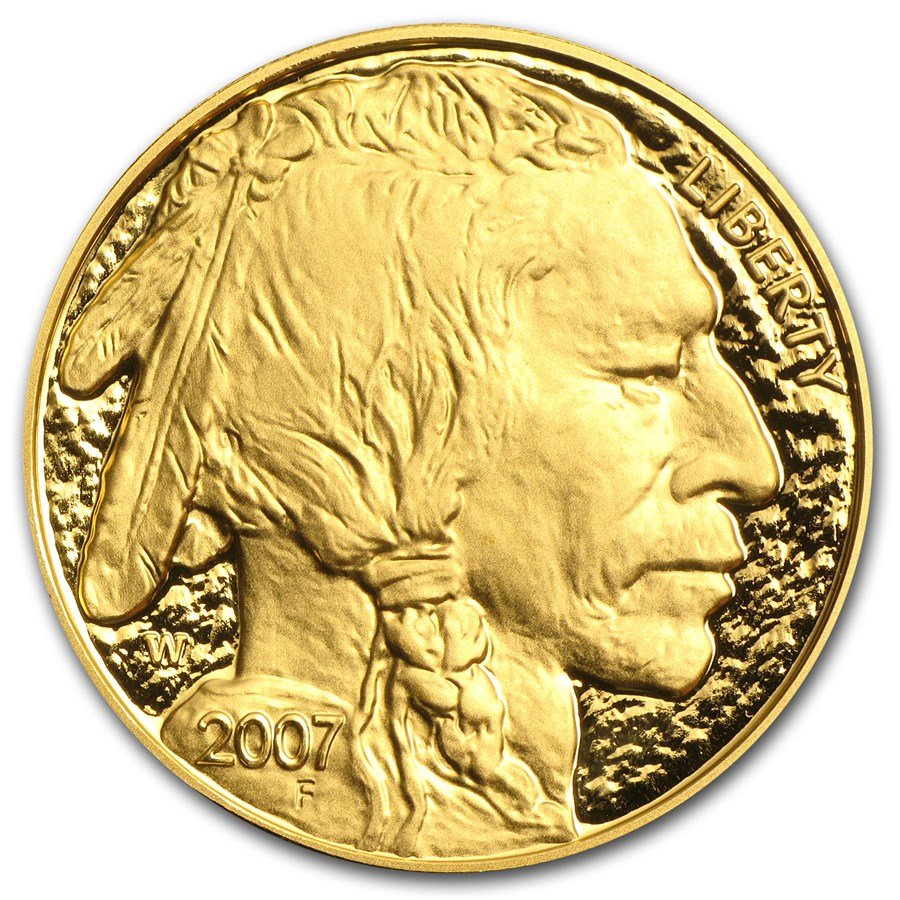
Mint Mark: “W”, indicating production at the West Point Mint.
-
Face Value: $50 U.S. legal tender, backed by the U.S. government (face value is symbolic — the gold content is worth substantially more).
🪙 Design & Presentation
-
Obverse: Showcases a Native American profile adapted from James Earle Fraser’s classic Buffalo Nickel design.
-
Reverse: Features the American bison (buffalo) — inspired by “Black Diamond,” a famed buffalo that once lived in New York’s Central Park Zoo.
-
Finish: Proof — highly polished, mirror-like surfaces with frosted design details for contrast and collector appeal.
-
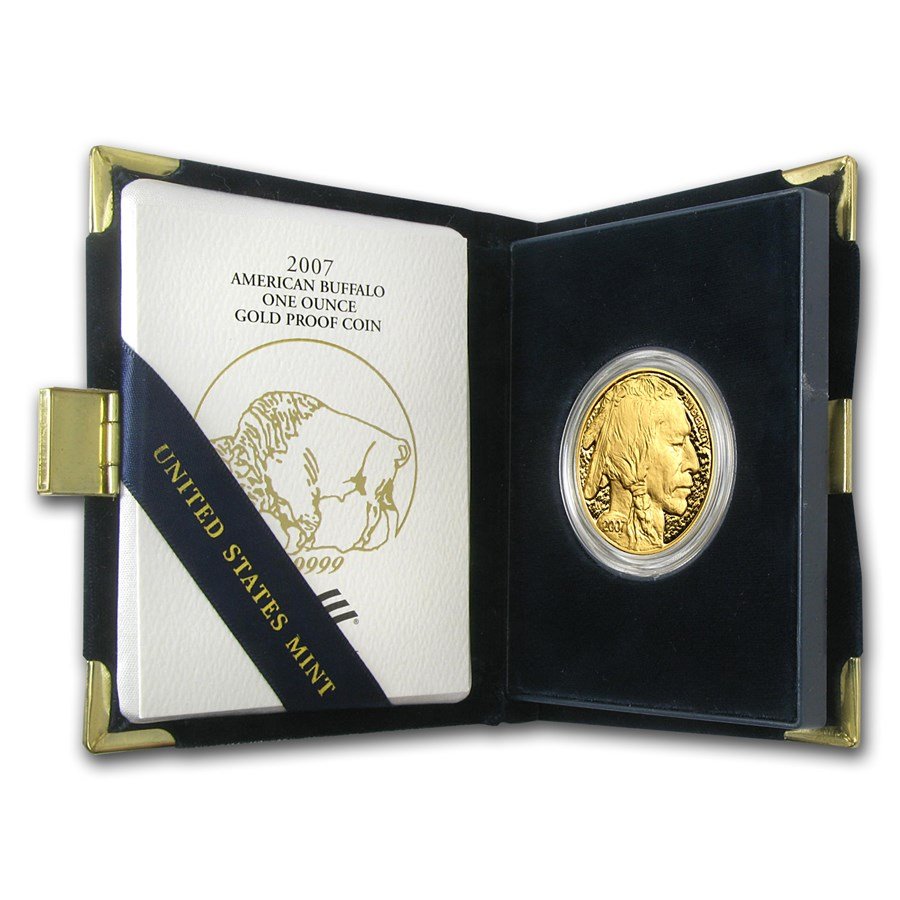
Original Packaging: Includes the U.S. Mint’s official display box and a Certificate of Authenticity (COA) certifying specifications and strike quality.
-
Mintage: Limited production (around 58,998 proof coins in 2007), making this issue more collectible than standard bullion offerings.
-
Dimensions: Approximately 32.7 mm diameter and about 2.95 mm thickness, with a reeded edge — typical for 1-ounce American Gold Buffalo coins.
📈 Collector & Investment Appeal
-
Proof Quality: Proof coins are struck with extra care and polished dies, resulting in exceptionally sharp detail and visual impact compared to standard bullion issues.
-
Original Mint Packaging: The included box and COA from the U.S. Mint add provenance and enhance collector value.
-
Historical Significance: As an early proof from the American Gold Buffalo series — one of the first U.S. coins struck in .9999 pure gold — this 2007 issue holds significant interest for collectors and investors alike.
-
Market Presence: Examples with original packaging and COA regularly appear in the numismatic secondary market and often trade at premiums above generic bullion values due to their collectible nature.