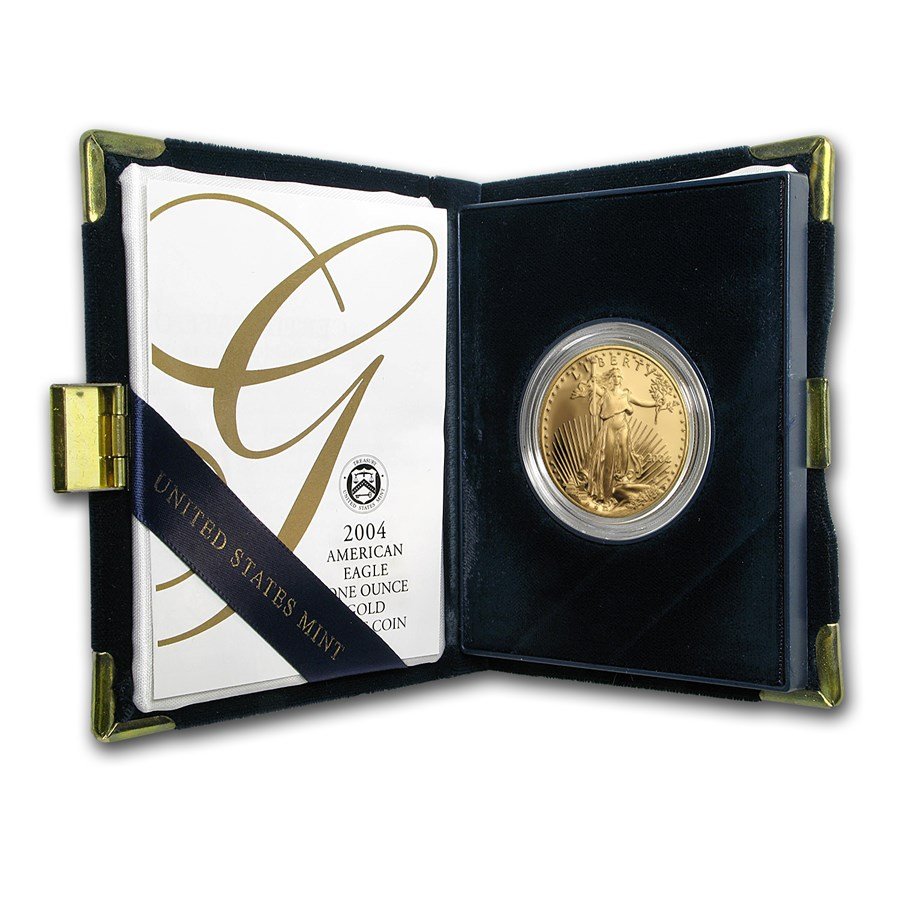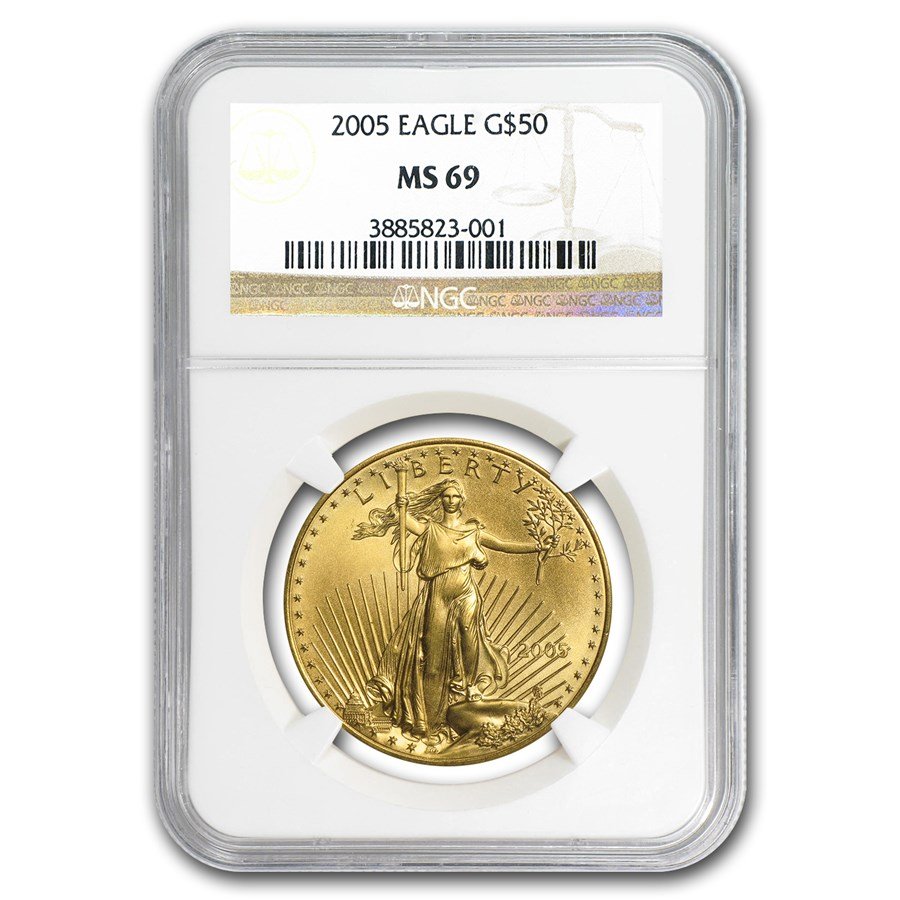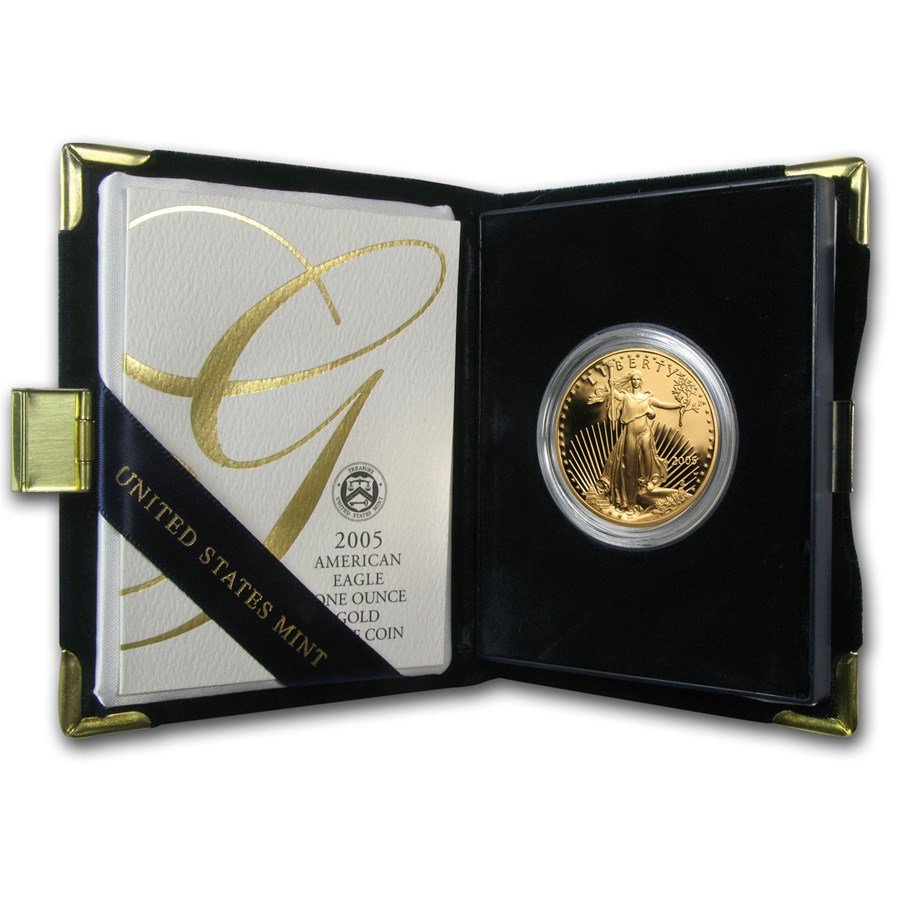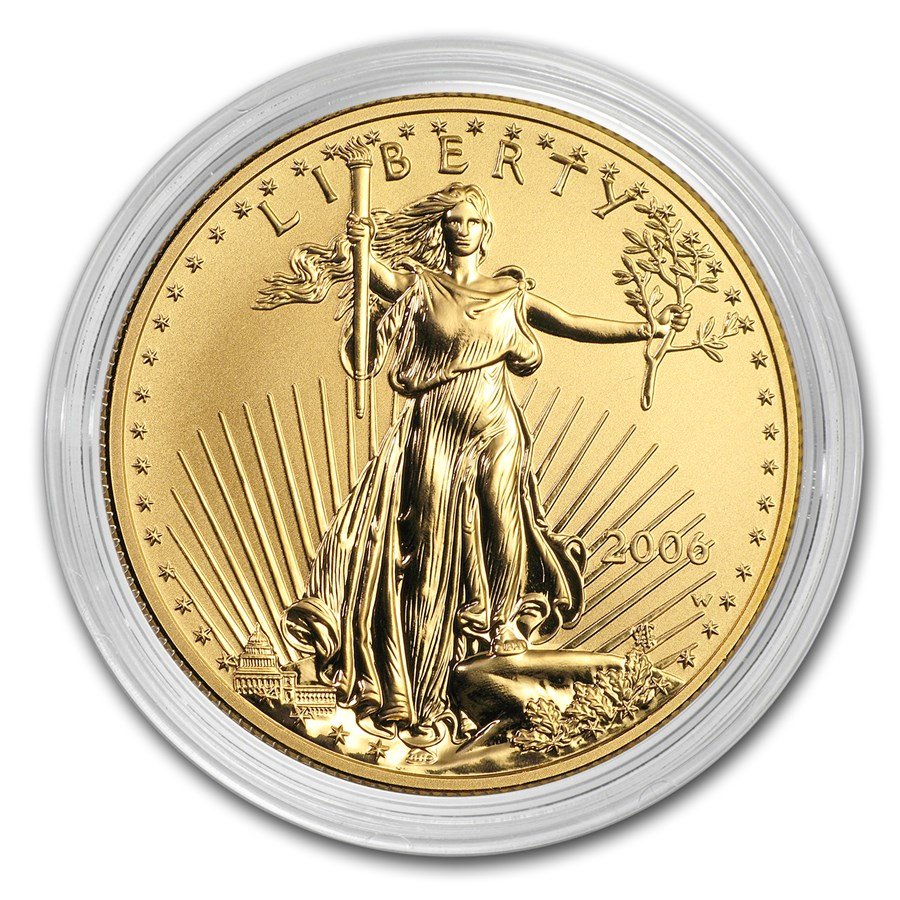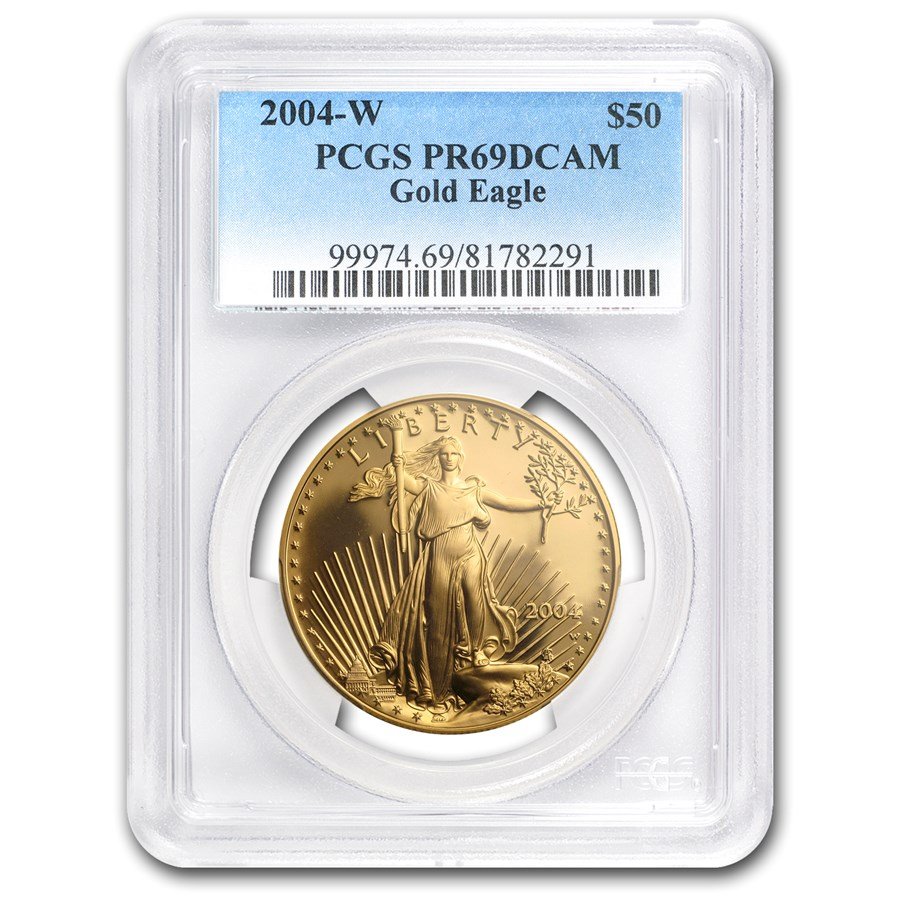
2004-W 1 oz Proof American Gol...
$5,424.16

.jpg)
.jpg)
The American Gold Buffalo series was first introduced in 2006 and marked the first time the United States Mint issued a bullion coin in .9999 pure gold. The proof version of this coin is struck on specially polished dies and planchets to create a proof finish — deep mirror fields with frosted design elements — giving it superior visual appeal compared with standard bullion coins. The 2012-W proof edition is part of this long-running series and represents one of the annual collector issues produced at the West Point Mint.
🪙 Design & Specifications
Gold Content & Purity:
• Contains 1 troy ounce of .9999 fine (24-karat) gold — among the highest purity gold coins issued by the U.S. Mint.
Finish:
• Proof — struck using polished dies and planchets for mirror-like backgrounds and frosted design details, emphasizing contrast and aesthetics.
Mint Mark:
• “W” — West Point Mint, where U.S. proof gold coins are produced.
Obverse Design:
• Depicts a Native American profile based on Fraser’s famed Buffalo Nickel design, chosen for its artistic strength and historical significance.
Reverse Design:
• Features the American bison (buffalo), inspired by a real animal known as Black Diamond that lived in New York’s Central Park Zoo.
Legal Tender:
• $50 U.S. face value, backed by the United States government (though its actual market value is tied to gold content and collectibility).
Dimensions:
• Diameter ~32.7 mm, thickness ~2.95 mm with a reeded edge — standard for 1 oz U.S. gold coins.
📈 Collector & Investment Appeal
Collector Finish: The proof finish provides exceptional visual contrast and detail compared with bullion examples, making it desirable for display and collection purposes.
Historic Design: The Buffalo motif, rooted in Fraser’s iconic 1913 coinage, connects this modern proof coin to classic American numismatic art.
Gold Content: As a full ounce of ultra-pure gold, this coin also carries intrinsic bullion value, adding investment appeal.
Mintage & Scarcity: Proof Gold Buffalo issues typically have limited mintages compared with bullion strikes, which can enhance collector demand over time